Most foundation mistakes are undertone mistakes, not shade mistakes. Here is how to work out your undertone and match depth without going too dark.
Undertone comes before shade number
Most foundation mistakes are not shade mistakes — they are undertone mistakes. Two foundations can look identical in the bottle and sit completely differently on the face, because one is built on a warm base and the other on a cool one. Getting the undertone right matters more than getting the depth exactly right, and it is the part most people skip.
Undertone is the colour underneath your skin: warm (golden, peachy), cool (pink, red) or neutral (a balance of both). Depth is how light or dark your skin is. A foundation that matches your depth but fights your undertone will look grey, ashy or slightly off in daylight even though it seemed fine indoors.
How to work out your undertone
Look at the veins on the inside of your wrist in natural light. If they read green, you lean warm. If they read blue or purple, you lean cool. If you genuinely cannot tell, you are probably neutral. A second check: warm skin tends to look better in gold jewellery and cool skin in silver, though this is a tendency rather than a rule.
Daylight is the only reliable light for this. Indoor lighting, and especially warm indoor lighting, shifts everything toward yellow and will make a cool foundation look warmer than it is.
Matching depth without going too dark
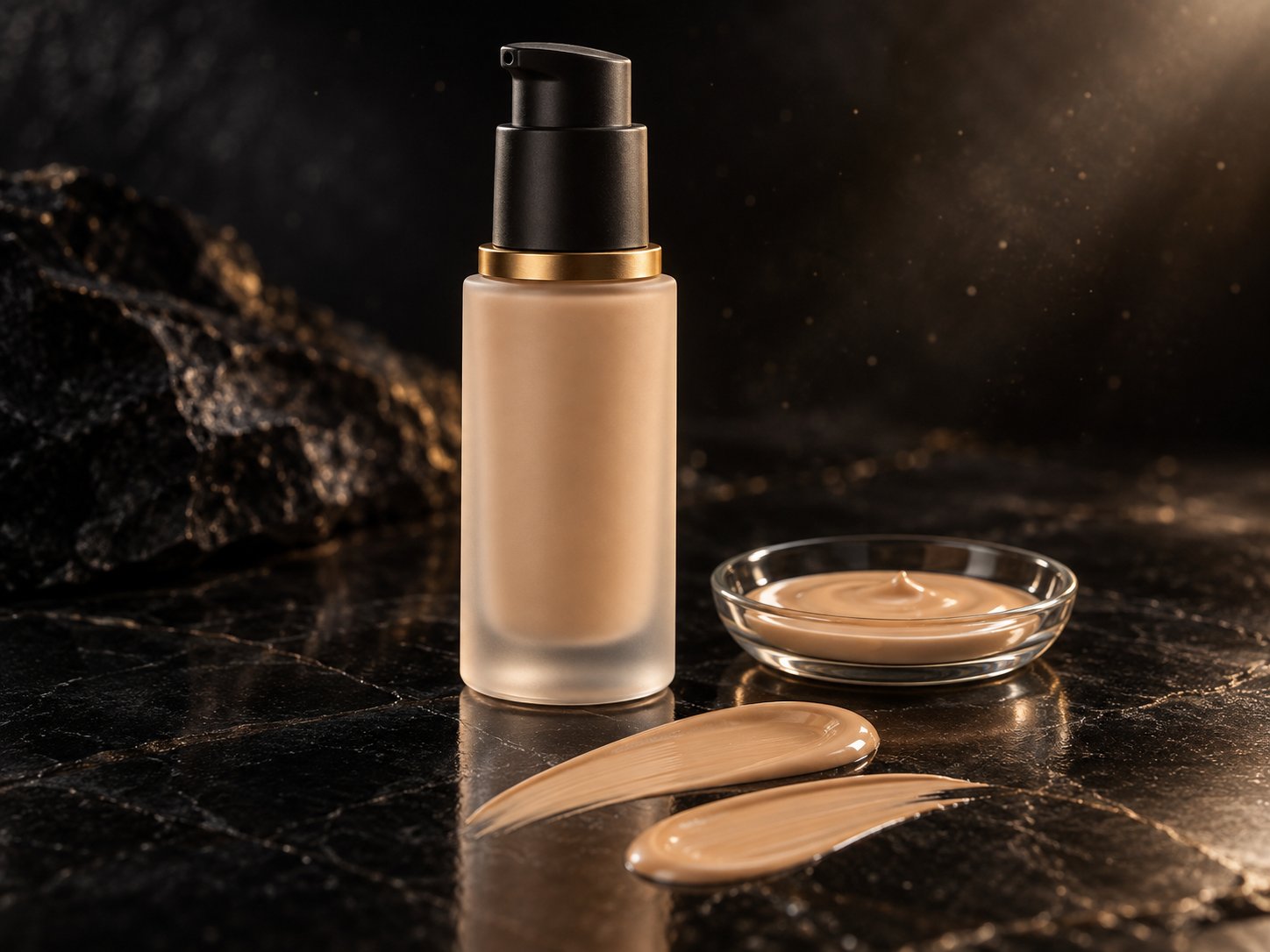
Test on the jawline, not the hand or the wrist. The hand is almost always a different depth from the face, and the wrist tells you about undertone rather than depth. Swipe a stripe along the jaw, let it settle for a few minutes, and check it in daylight. The right shade disappears into the neck; a shade that is too dark will read as a visible band along the jaw.
If you are between two shades, the choice depends on what you plan to do with the product. For a natural, everyday result, go with the warmer of the two — warm shades blend into skin more forgivingly. If you intend to build coverage, the cooler shade will hold its depth better as you layer.
Choosing a finish that suits your skin
Finish is a separate decision from shade, and it changes how the same colour reads. A luminous finish reflects light, which softens texture and keeps the skin looking like skin; it suits normal to dry skin and anyone who wants a natural result. A matte finish absorbs light, which controls shine and holds longer; it suits oily skin and anyone who needs the base to stay put through a long day.
If your skin is combination, you do not have to choose one for the whole face. A luminous base with powder set only through the centre — forehead, nose and chin — keeps the natural finish where you want it and controls shine where you need it.
Applying foundation so it reads as skin
Press, do not sweep. A damp sponge pressed into the skin pushes the product into the texture rather than across it, which is what stops a base from looking like a layer sitting on top. Build in thin layers and let each one settle before adding the next; two thin layers cover more evenly than one thick one and are far less likely to go cakey.
Set only where you need it. Powdering the whole face flattens a luminous finish and makes any base look heavier than it is. If you want the coverage to last, a light setting powder through the centre of the face is usually enough.
Making a foundation match last
Foundations oxidise — they can darken slightly as they settle into the skin, which is why a shade that looks perfect in the shop can look half a step too dark an hour later. Testing on the jaw and waiting a few minutes before deciding is the simplest way to account for it. If a foundation consistently oxidises on you, going half a shade lighter than your match usually corrects it.