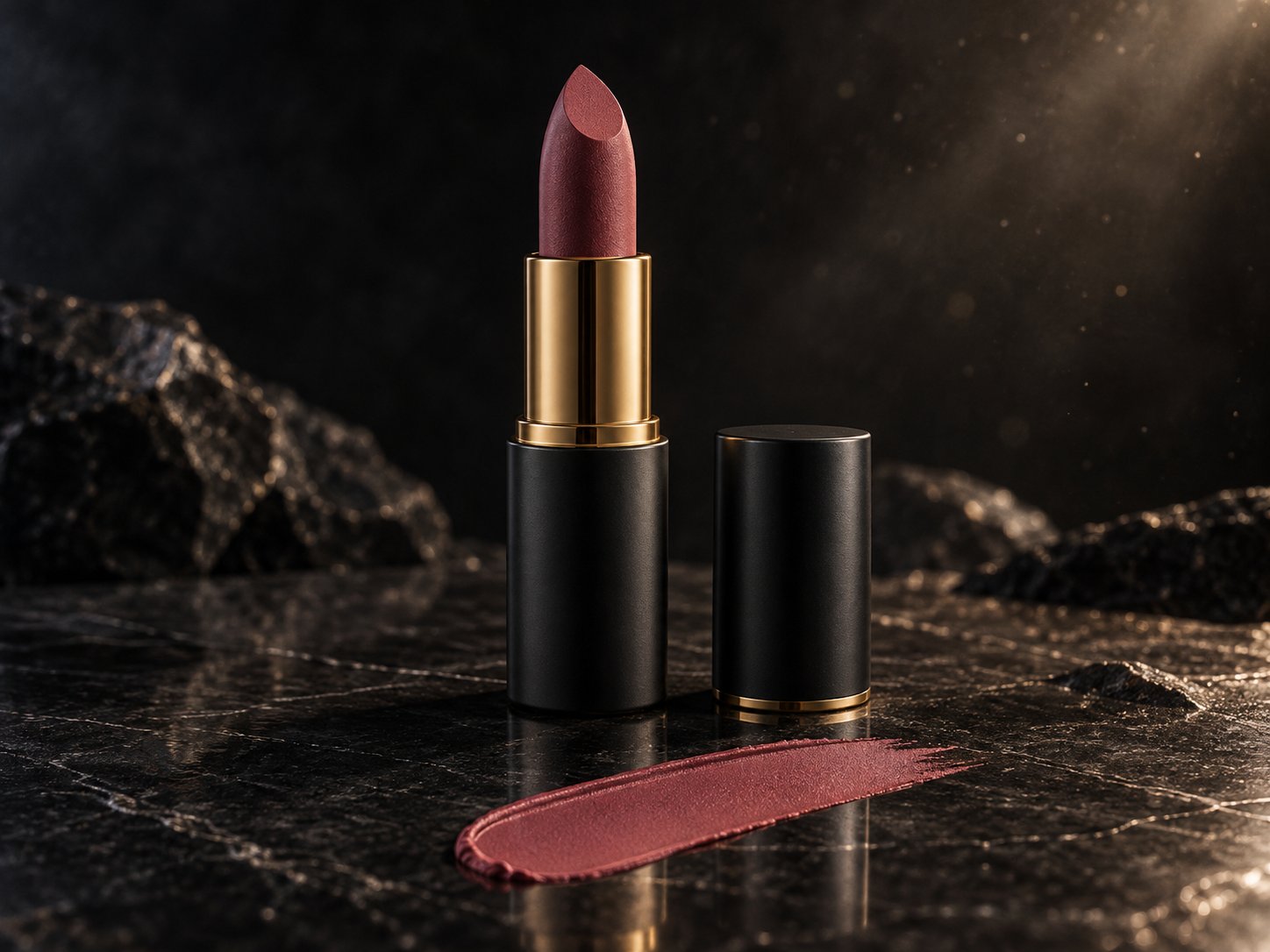
Matte lipstick is lip colour made without the oils that create shine. Here is what that changes about application, wear time and shade choice.
What matte lipstick actually is
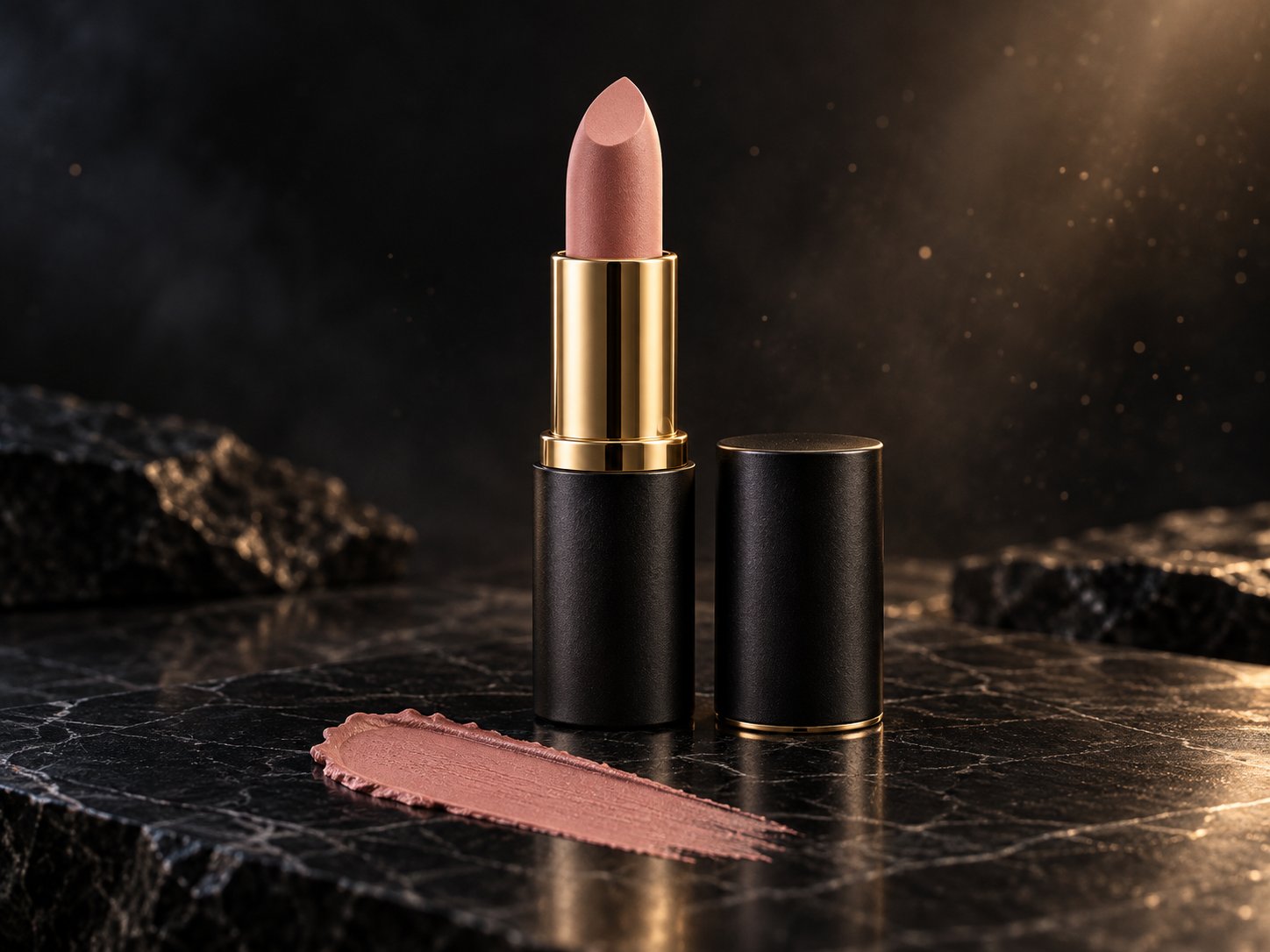
Matte lipstick is a lip colour formulated without the oils and waxes that give a glossy or satin finish. Instead of reflecting light, the surface absorbs it, which is why a matte lip reads as flat, dense colour rather than shine. That single difference in finish changes almost everything else about how the product behaves: how it applies, how long it lasts, and how it feels on the lip.
The trade-off is straightforward. Because there is less oil to keep the pigment moving, a matte formula can feel dry if it is built on a heavy base. A well-made matte lipstick solves this by carrying the pigment in a light, non-dragging cream that sets to a soft powder rather than a hard film — you get the flat finish without the tight feeling.
How matte differs from satin, gloss and cream finishes
Satin sits between matte and gloss: it has some light reflection but no wet look, and it usually feels more comfortable on dry lips. Gloss is the opposite end of the scale — high shine, low pigment density, and the shortest wear time of the three. Cream formulas sit close to satin but with more slip, which makes them easier to blend and easier to transfer.
Matte is the finish that holds its edge. It does not slide once it has set, it does not bleed into fine lines as quickly, and it keeps its colour intensity through a meal better than a gloss or a cream. That is why matte is the default choice when the lip is meant to be the point of the face.
How to apply matte lipstick so it looks even
Start with the lip itself rather than the product. Dry, flaky lips will show every texture under a matte finish, so a light exfoliation and a thin layer of balm — blotted down, not left wet — gives the colour something even to sit on.
Apply the first pass straight from the bullet, following your natural lip line. Matte pigment is dense, so one pass usually covers; a second layer is for depth, not for coverage. If you want a softer, blurred edge, tap the colour on with a fingertip and press it outward before it sets — matte blurs easily in the first few seconds and barely at all afterwards.
If you are building a defined shape, line the lip first with a shade close to the lipstick, then fill in. The liner gives the matte colour a boundary to stop at, which is what keeps the edge crisp through the day.
Making a matte lip last
Matte formulas last longer than gloss or cream because there is less oil to migrate, but a few habits extend that further. Blot after the first layer and then apply a second thin layer rather than one thick one — thin layers set harder and wear more evenly. Avoid pressing the lips together repeatedly, which breaks the set film at the centre. And keep the lip balm for the end of the day rather than on top of the colour, since oil applied over matte will lift it.
Choosing a matte shade
Shade choice matters more in matte than in gloss, because a flat finish shows the colour exactly as it is. Deep muted tones such as a red-brown read as a statement and suit a wide range of skin tones. Warm nudes and pinks stay wearable for everyday wear, provided they are built on a warm base rather than a beige one — a beige-based nude is what turns grey on the lip.
If you are deciding between a deeper and a softer shade, the deeper one is the safer statement and the softer one is the safer everyday choice. Both work in the same formula, so the decision is about the look rather than the wear.